

If your Craftsman garage door opener goes up but not down, it feels like a one-way street at rush hour. The motor hums, the door lifts, and then—nothing on the way down. That mix of confusion and worry is common, especially when the garage is the main way in and out of the house.
This issue shows up a lot across Toronto and the GTA. The opener proves the motor works when it lifts the door, so the problem is almost never power or a dead unit. In most cases, the safety system thinks something is in the way, or the opener settings are out of tune. That safety-first programming is doing its job, even if it is inconvenient.
This guide walks you through a simple, step-by-step process that starts with easy checks and moves to deeper diagnostics. Most fixes take a few minutes and basic tools. You will also see clear signs for when to stop and call a pro. As a local team, Swift Garage Doors helps GTA homeowners with this exact problem daily, so the steps below reflect real fixes that work. Keep reading to find out why the door opens fine, why it refuses to close, and how to get it working safely again.
Understanding Why Your Craftsman Opener Won’t Close (But Opens Fine)
Modern openers are built with safety at the core. Since 1993, all openers must reverse if something is detected in the path while closing. The logic board monitors sensor signals, travel limits, and resistance. If it “sees” a problem during the down cycle, it stops and opens as a precaution.
Opening is different because lifting the door away from people or objects carries less risk. That is why “up” works while “down” stalls or reverses. The main systems to check are the photo-eye safety sensors, the down travel limit, the close force setting, and the door’s mechanical balance. The diagnostic LED on the motor housing often blinks a code that points straight to the issue. This behaviour is not random. There is always a specific cause, and you can find it with a simple checklist.
“If the opener runs the door up, it’s alive. When it won’t go down, think sensors, settings, or the door itself—always in that order.” — Swift Garage Doors, Lead Technician
Here’s a quick at-a-glance guide before you dive in:
| What to Check | Symptom You See | Likely Cause | Quick Fix | Time |
|---|---|---|---|---|
| Photo-Eye Sensors | Lights flash, door won’t close | Dirty lens, misalignment, glare | Clean lenses, realign, shade from sun | 2–10 min |
| Down Travel Limit | Closes, then pops back open | Set too low (over-travel) | Reduce down travel slightly | 5–10 min |
| Close Force | Reverses near the floor | Friction or cold-weather drag | Increase close force a notch and retest | 5–10 min |
| Door Balance | Heavy or jerky movement | Spring/roller issues | Test balance; call for spring repair | 5 min test; repair by pro |
Safety Sensor Issues: The #1 Cause of Closing Failures
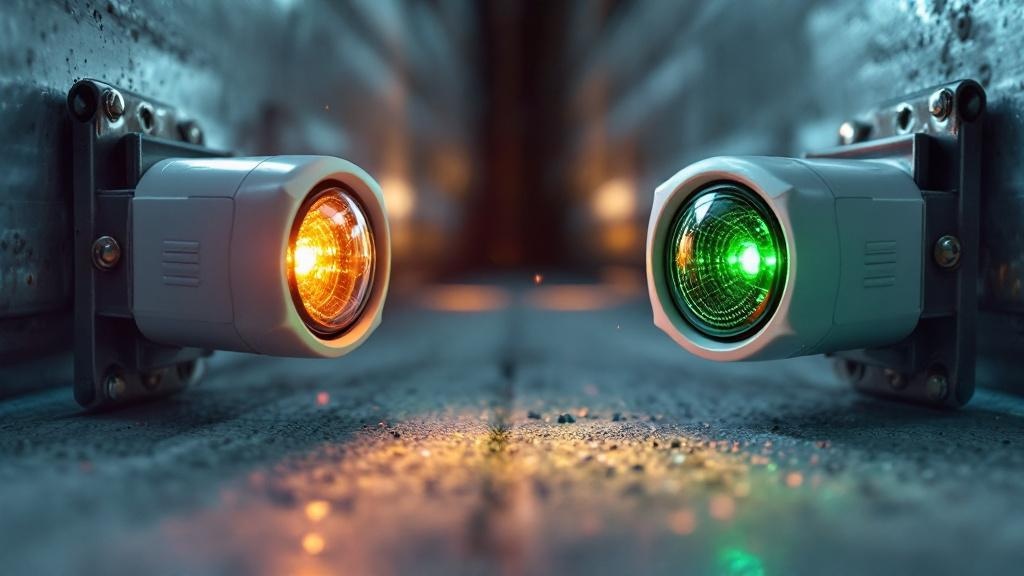
Safety reversing sensors, also called photo-eyes, cause most “won’t close” problems. They sit on both sides of the garage opening, about 4–6 inches above the floor. One sends an invisible beam to the other. If the beam is blocked or the sensors cannot “see” each other, the opener will refuse to close and will often flash the lights.
Start here before touching any settings. A two-minute sensor fix solves this problem in most homes.
Tip: Most Craftsman units allow “constant-pressure close.” If the path is clear, press and hold the wall button until the door fully closes. If it closes this way, the sensors or their wiring are almost certainly at fault. Never use this method unless the doorway is clear.
Checking for Obstructions and Debris
Begin with a slow visual sweep along the line between the two sensors. Boxes, garbage bins, rakes, toys, or even a bike tire can sit just high enough to cut the beam. Webs, leaves, and dust also build up on the lenses and block the light, even when the path looks clear at a glance.
Give each lens a careful clean. Use a soft microfiber cloth and a light touch so you do not scratch the face. If the lens is grimy, a tiny amount of mild glass cleaner on the cloth helps, but do not spray the sensor. Dry the lens fully and test the door.
Common beam blockers to check quickly:
- Low items like snow shovels, skateboards, or a broom head
- Yard bags or recycling bins tucked near the jamb
- Seasonal debris: salt dust, cobwebs, leaves, or road grit
Diagnosing and Fixing Sensor Misalignment
Each sensor has a status light. The sender’s light is usually amber and stays solid when powered. The receiver’s light is often green and only stays solid when it picks up the beam. If the green light is off or flickers, alignment is off.
Loosen the bracket just enough to move the sensor by hand. Nudge it until the green light turns solid and stays that way. Small movements matter, so take it slow and recheck after each touch. A string pulled tight between lenses helps confirm they sit at the same height and face each other. Once the light is steady, snug the bracket screws so vibration from daily use does not knock it out again, then test the opener.
Quick alignment steps:
- Confirm both sensors have power; the amber light should be solid.
- Gently adjust the receiver until the green light turns and stays solid.
- Tighten bracket screws and tug the wire lightly to make sure nothing shifts.
- Run a full close cycle; watch the lights on both sensors to confirm stability.
Addressing Sunlight Interference
Direct sun can “blind” the receiver and wash out the infrared signal. This shows up at certain times of day, usually morning or late afternoon, when the sun lines up with the garage opening. If your door only refuses to close at those times, you likely have glare, not a bad sensor.
Make a small shade to block direct light without covering the lens. A piece of cardboard works for testing, and you can buy a permanent sun shield later. Another smart fix is to swap the sender and receiver sides so the receiver sits on the shadier wall. In the GTA, sun angles change with the seasons, so what works in winter may need a tweak in summer.
Simple ways to reduce glare:
- Add a small, non-reflective hood just above the sensor
- Rotate the sensor within its bracket a few degrees to angle away from direct sun
- Move or repaint reflective items (metal buckets, foil insulation) near the beam path
Adjusting Travel Limits and Force Settings
If the sensors are clean, aligned, and powered, the next stop is the opener’s settings. Two controls matter here. The down travel limit tells the opener where the floor is. The close force tells it how much resistance it should accept before reversing. If either is off, the opener thinks it hit something and opens back up.
Make small changes and test after each one. These are fine-tune adjustments, not big swings.
“When tuning an opener, tiny moves matter. Adjust a little, test a lot.” — Swift Garage Doors, Senior Technician
Correcting the Down Travel Limit
When the down limit is set too far, the door reaches the floor, the motor keeps pushing, meets solid resistance, and then reverses. It looks like a “close then pop back open” problem, but it is really a stop point that is set too low.
Find the travel controls on the motor head. Older Craftsman models use two plastic screws labelled for up and down travel. Newer models use buttons with a small display. Turn the down travel control slightly—about a quarter turn—to reduce travel. Run the door and watch closely. Keep making small adjustments until the door meets the floor, seals the gap, and stays put. If your unit uses buttons, follow the steps in your model manual to enter travel programming, set the closed position, and save.
Step-by-step refinement:
- Turn the down travel control a quarter turn counterclockwise to shorten travel.
- Close the door and watch for a tight seal at the floor without bounce-back.
- Recheck the weatherstrip; a thick new bottom seal may require a minor re-tune.
- Repeat in small increments until the bounce stops.
Fine-Tuning the Close Force Sensitivity
Close force is the amount of push the opener uses before it decides to reverse. If it is set too light, normal friction from stiff rollers or cold-weather drag in Toronto can trigger a reversal. If it is set too heavy, the door may not reverse when it should.
Locate the close force control. Turn it a tiny amount—about one eighth of a turn—to increase force, then test a full cycle. After any force change, do the 2×4 test for safety. Place a 2×4 flat on the floor at the centre of the door’s path. When the door touches the board, it must reverse right away. If it does not, reduce the force and test again. Your goal is the lowest force that closes the door reliably and still reverses on contact.
Practical pointers:
- Lubricate metal rollers and hinges before bumping force; lowering friction often fixes false reversals.
- In colder months, a small, temporary increase may help; return to the lighter setting in spring.
- Always validate with the 2×4 test after any change.
Inspecting Physical Obstructions and Mechanical Components
Sometimes the opener is fine, but something in the door’s path or hardware creates drag. The logic board cannot tell the difference between a real obstruction and a bind in the track. It sees resistance and commands a reverse to stay safe.
A quick physical check often reveals the trouble spot and clears it without any tools.
Checking Manual Locks and Track Condition
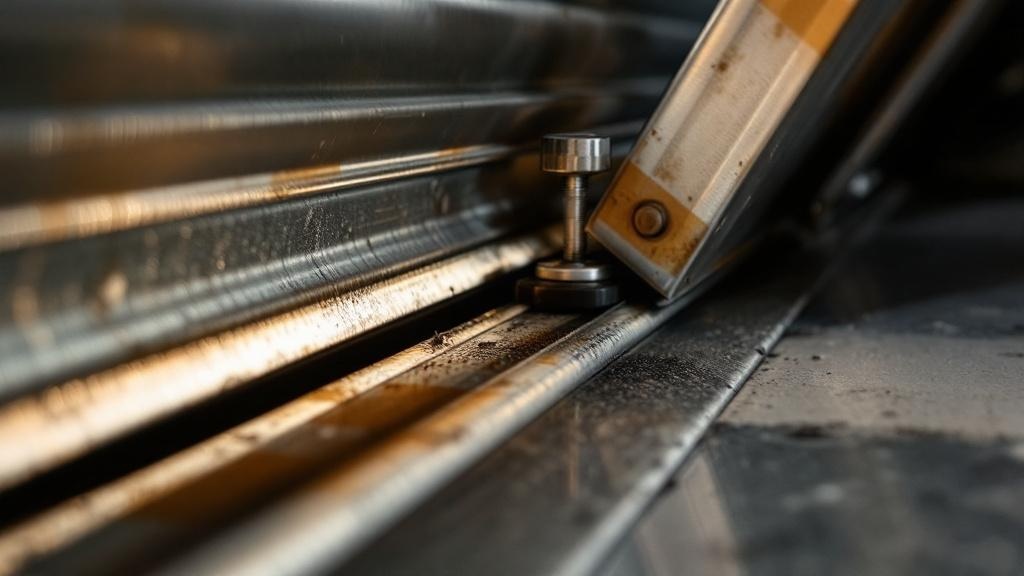
Make sure a manual slide lock on the door is not engaged. It is usually a small handle or bar inside the garage that slides into the track. If it is partly engaged, the door will jam on the way down and reverse.
Next, inspect the tracks from floor to ceiling and then along the horizontal runs. Look for dents, bends, or screws that backed out of their brackets. Wipe out dirt and small stones that may have fallen into the channel. Do not grease the tracks because that creates a sticky mess that attracts more grit. Watch each roller as the door moves. A cracked or seized roller needs replacement. Minor track nudges can be straightened with a rubber mallet and a block of wood. Significant damage is a job for a technician.
Track checklist:
- Clear the channel of pebbles, road salt, or drywall crumbs
- Re-seat any loose fasteners on track brackets
- Confirm track spacing is even on both sides of the door
- Replace noisy or wobbly rollers; nylon rollers run quieter and smoother
Testing Door Balance and Spring Function
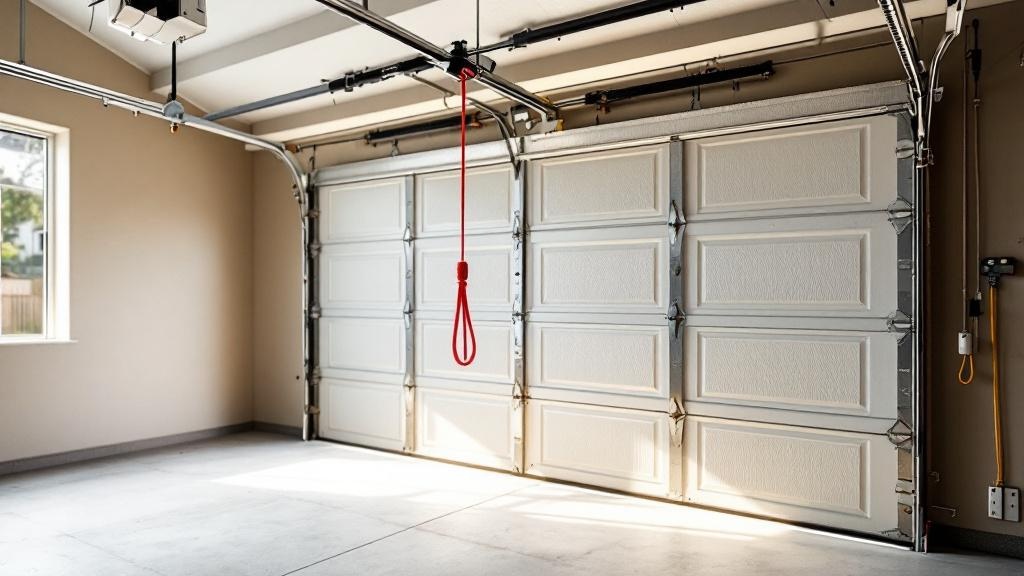
A garage door should feel balanced and move smoothly by hand. Pull the red emergency release cord to disconnect the opener, then lift the door to about halfway. If it stays in place or moves slowly, balance is good. If it slams shut or feels heavy, the springs are not doing their job.
Look at torsion springs above the door for a visible gap in the coil. Check side-mounted extension springs for stretching or damage and confirm the safety cables are intact. Listen for grinding from pulleys or bearings. These are warning signs of a failing spring system. Springs carry extreme tension and can cause severe injury. Do not try to adjust or replace them yourself. Book service right away. Swift Garage Doors offers 24/7 spring replacement across the GTA for this exact reason.
Safety note: A door that won’t stay at mid-height is unsafe to operate. Leave it down and call a pro for spring service.
Troubleshooting Control Systems and Remote Issues
Control problems are less common for “down only” failures, but they are worth ruling out. Check the wall control for a lock or vacation mode that disables remotes. When active, the wall button still runs the door, but remotes will not work.
If the wall control does nothing, wiring may be the issue. You can isolate this by disconnecting the wall wires at the opener and briefly bridging the terminals with a short piece of wire to simulate a button press. If the door runs, the wall switch or its wiring needs attention. For remotes, swap the battery and reprogram if needed. If the wall switch closes the door but remotes do not, you still likely have a sensor problem rather than a remote failure.
Extra quick checks:
- Power cycle the opener: unplug for 30 seconds, plug back in, and test
- Inspect low-voltage wires for staples piercing the insulation near the sensor or wall button
- Confirm the antenna on the opener hangs straight for better remote reception
- If you recently added LED bulbs, test with standard bulbs; some LEDs can cause interference
When Internal Opener Components Fail
If you have cleaned and aligned sensors, set travel and force correctly, and the door hardware checks out, the fault may be inside the opener. The logic board can fail after power surges or age. The diagnostic LED may show a pattern that points to a board or sensor circuit fault. An RPM sensor can fail and confuse the unit about door position. On some models, a travel module loses its memory and the opener “forgets” the limits.
You might also hear the motor run while the chain or belt stands still. That often means stripped internal gears. White plastic shavings on the floor under the opener support this diagnosis. Internal repairs call for parts, testing, and experience. At this point, call a technician.
“Most openers give you a clue—blinking codes, unusual sounds, or plastic dust on the floor. Catch the hint early, and repairs stay simple.” — Swift Garage Doors, Service Team
How Swift Garage Doors Solves Craftsman Opener Issues in the GTA
Some fixes are quick DIY wins, and others need trained hands. Swift Garage Doors handles both every day across Toronto and the GTA. Our licensed technicians work on Craftsman openers constantly, so they move fast from symptom to cause without guesswork.
We start with a full diagnostic: sensor function, alignment, wiring continuity, limits, force, and door balance. If the problem sits inside the opener, we repair or replace components like logic boards, RPM sensors, or gears. We also address related hardware issues such as rollers, cables, and tracks so the opener is not fighting the door. Same-day appointments and 24/7 emergency service keep your garage secure when timing matters. You get clear pricing up front and a walkthrough of the repair before any work begins. Parts and labour carry a warranty, and we offer preventative tune-ups so the same headache does not return when winter hits again.
Preventative Maintenance to Avoid Future Closing Problems
A little routine care keeps your opener reliable and safe. Test the photo-eyes monthly by blocking the beam with a box to confirm the door reverses. Every few months, wipe the sensor lenses and glance at the alignment lights. Once a year, lubricate hinges, metal rollers, and spring coils with a garage-door-rated spray. Skip the tracks so rollers roll instead of slide.
Toronto winters add resistance, so a light bump to close force in cold months can help, followed by the 2×4 reversal test. Do a quick hardware check twice a year and snug any loose fasteners. Consider an annual tune-up with Swift Garage Doors. We catch worn parts early and set everything to spec, which cuts emergency calls and keeps things quiet.
A simple maintenance plan:
- Monthly: Test photo-eyes by blocking the beam; verify reversal
- Quarterly: Clean sensor lenses; check sensor lights for a steady glow
- Biannually: Tighten hinge and track fasteners; look for frayed cables
- Annually: Lubricate moving metal parts; run the 2×4 test; review travel limits and force
Frequently Asked Questions
Why Does My Craftsman Garage Door Close Then Immediately Open Back Up?
This usually means the down travel limit is set too far. The door hits the floor, the motor keeps pushing, and the opener thinks it hit something, so it reverses. Reduce the down travel in small steps and test after each change. Also watch for tight rollers or a bent track causing drag.
Can Sunlight Really Stop My Garage Door From Closing?
Yes. Direct sun can overpower the photo-eye receiver and block the infrared beam from the sender. It shows up during low sun angles in the morning or late afternoon. Add a small shade, swap the sender and receiver sides, or use a sun shield. The time-of-day pattern is the giveaway.
How Do I Know If My Garage Door Springs Are Broken?
A visible gap in a torsion spring is a sure sign. The door will feel extremely heavy when you try to lift it by hand, and it may slam shut during a balance test. Many people also hear a loud bang when a spring snaps. Do not attempt a DIY repair. Call a professional right away.
What Does It Mean When My Craftsman Opener Light Blinks 10 Times?
Ten flashes usually point to a safety sensor problem. The opener has entered safety mode because it does not see a clear beam. Check for obstructions, dirty lenses, misalignment, or damaged wiring. Work through the sensor steps in this guide. If the wiring and sensors are fine, replacement may be needed.
Should I Try to Repair My Garage Door Opener Myself or Call a Professional?
DIY is great for simple items like cleaning and aligning sensors, adjusting travel limits, and clearing obstructions. Call a pro for spring or cable issues, internal opener repairs, or ongoing electrical faults. If you are not comfortable on a ladder or tracing wires, it is safer to book service. Swift Garage Doors supports homeowners across the GTA with fast, expert repairs.
Conclusion
Most cases where a Craftsman garage door opener goes up but not down come down to the safety sensors. A careful clean and alignment often bring the door back to normal. If sensors check out, fine-tune the down travel and close force, then look for physical binds or balance problems.
Use a simple, step-by-step approach and you will often fix the issue without special tools. If the door still will not close, or you suspect springs, wiring faults, or a bad logic board, it is time to call in help. Swift Garage Doors is a trusted choice across the GTA with 24/7 support, same-day repairs, and licensed technicians who get it right the first time. Reach out any time for fast diagnosis and a smooth, safe close—every time.
