
Standing in front of a garage door with a remote in hand should feel simple. Yet the second the question pops up—Which is the best garage door opener?—it becomes clear that the choices have multiplied. Chain or belt. AC or DC. Genie or Chamberlain. LiftMaster or something else. Add smart features and Wi‑Fi control to the mix and the decision gets even harder.
The opener you pick affects far more than a click of a button. It changes daily comfort, noise in nearby rooms, access during a power outage, and long‑term maintenance costs. For homeowners, property managers, and developers in the GTA, the “best” choice depends on garage layout, door weight, noise tolerance, security needs, and budget.
At Swift Garage Doors, we install and service thousands of units across the Greater Toronto Area every year. Our licensed technicians bring over a decade of experience to every job, and our customer‑first approach means clear advice, clean installs, and support long after the sale. Think of this guide as a straight answer from a trusted neighbour who works on garage doors all day.
Here is what you will get in the next few minutes:
- A clear walk‑through of garage door opener types
- The difference between AC and DC motors
- The smart features that matter in 2026
- Safety must‑haves
- Our top models list
- Scenario‑based picks for real homes in the GTA
By the end, you will know which garage door opener fits your needs—without second‑guessing or guesswork.
“Your garage door is the largest moving object in your home. Treat it with the same attention you give to any other major appliance.” — International Door Association (IDA)
Understanding Garage Door Opener Drive Systems: The Foundation Of Your Choice
The drive system sets the sound, smoothness, maintenance, and cost of your opener. In simple terms, the motor moves a trolley along a rail—or turns the torsion bar on wall‑mount units—to lift and lower the door. Four main garage door opener types cover almost every situation.
Chain Drive Openers: The Traditional Workhorse
A chain drive uses a bicycle‑style metal chain to pull a trolley along a steel rail. This simple setup has been trusted for decades because it is tough, parts are easy to service, and it handles heavy doors without fuss. If you have a large insulated steel door or a solid wood panel, a chain drive has the grunt to move it day after day.
The biggest trade‑off is noise. Metal on metal creates rattle and vibration you will hear inside the house, especially if bedrooms sit above the garage. Chain systems also need periodic tensioning and lubrication, and their start and stop can feel a touch jerky compared to belt systems.
On price, chain drives usually land between $200 and $400 CAD, which makes them attractive when budgets are tight. We still recommend a quality chain drive in detached garages, workshops, or rental properties where sound is not a concern. When properly installed and tuned, a chain drive can be a dependable, long‑lasting choice for heavy doors at a fair cost.
“If your door is heavier or insulated, a chain drive is often the most budget‑friendly way to get dependable lifting power.” — Swift Garage Doors, Senior Technician
Belt Drive Openers: The Quiet Premium Choice

A belt drive replaces the chain with a steel‑reinforced belt made from rubber, polyurethane, or fibreglass. That change cuts noise dramatically. Paired with a DC motor, soft‑start and soft‑stop technology smooths every cycle, which reduces vibration in nearby rooms and wear on the door itself.
Belt drives need less ongoing attention because the belt does not require routine lubrication. They cost more—typically $300 to $600 CAD—but for an attached garage, the quiet operation is worth it. Modern belts are strong enough to lift standard double doors and even many heavy insulated designs, so the old concern about belts being “too weak” no longer applies.
Cold Canadian winters are another worry for many buyers. High‑quality belts hold up well in low temperatures and humidity swings. For homes with living space above or beside the garage, a belt drive is almost always our top pick for a quiet garage door opener. Most GTA homeowners who ask whether a garage door opener chain or belt is better end up choosing a belt once they hear the difference.
Screw Drive Openers: Speed And Simplicity
Screw drive openers use a long threaded steel rod. The motor spins the rod, the trolley travels along the threads, and the door moves with fewer moving parts than other systems. This makes screw drives fast, powerful, and simple to maintain with the right lubricant.
Noise sits between chain and belt, with a distinct whir that some notice more in colder weather. Temperature swings can thicken grease if the wrong product is used, so a lithium‑based lubricant rated for low temperatures is important in Canada. Pricing generally runs $350 to $650 CAD.
We suggest screw drives for wide or single‑panel doors where speed and direct power are helpful. They are less common in our GTA installs due to the climate, but they can perform well when maintained correctly and matched to the right door.
Wall‑Mount (Jackshaft) Openers: The Space‑Saving Innovation
Wall‑mount (jackshaft) openers sit on the wall beside the door and connect directly to the torsion bar. There is no long rail overhead, which opens up the entire ceiling for storage, car lifts, or high‑lift track systems. If your garage has a very high ceiling, low headroom, or angled beams, this design solves problems a standard opener cannot.
Because there is no overhead rail, these units run very quietly and send almost no vibration into rooms above. Security gets a boost too. Premium models like the LiftMaster 8500W add an automatic deadbolt that locks the door every time it closes. That physical lock is a serious deterrent against forced entry.
The trade‑off is cost and compatibility. Expect $600 to $1,000+ CAD for the unit. You need a torsion spring system (not extension springs), about 8 inches of side room, 3 inches above the torsion bar, and a nearby electrical outlet. Not every door setup qualifies. In our Toronto‑area work, wall‑mount openers are increasingly popular in custom homes and condos with unusual ceiling heights. Professional installation matters here because correct mounting, cable tension, and safety checks are more involved than a standard overhead setup.
Quick Comparison At A Glance
| Drive Type | Noise Level | Maintenance | Best For | Typical Cost (CAD) | Key Notes |
|---|---|---|---|---|---|
| Chain | Higher | Medium (tension + lube) | Heavy doors, detached garages | $200–$400 | Strong value and lifting power |
| Belt | Very Low | Low | Attached homes, bedrooms overhead | $300–$600 | Smooth, quiet cycles with DC motor |
| Screw | Medium | Low‑Medium (proper lube) | Wide/single‑panel doors | $350–$650 | Fast operation; use cold‑rated grease |
| Wall‑Mount | Very Low | Low | High‑lift/low headroom, ceiling storage | $600–$1,000+ | Frees ceiling space, needs torsion springs |
Motor Power Decoded: AC vs. DC Motors And Horsepower Requirements
Think of the motor as the heart of the opener. It provides the push to move a properly balanced door, while springs carry most of the door’s weight. Picking the right motor type and power helps the opener last.
AC vs. DC Motor Technology
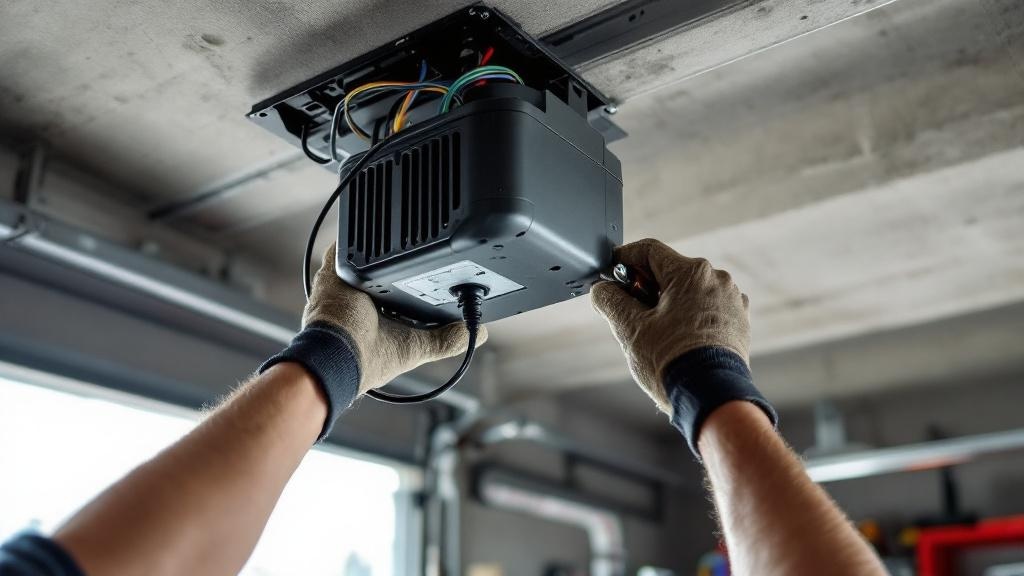
Older openers leaned on AC motors. They are known for raw power and long service life, but they are heavier, run at a single speed, and make more noise. They still work well on basic chain drive units where budget is the main driver.
Modern openers mostly use DC motors. They are quieter, smaller, and sip less power. A key benefit is soft‑start and soft‑stop control, which ramps the door gently at the beginning and end of travel. That smoother motion helps reduce wear on rollers, hinges, and the opener’s internal parts. DC motors also support battery backup, which keeps the door moving when the power goes out.
DC electronics play nicely with smart features as well. Fine‑tuned force settings, better monitoring of door position, and built‑in Wi‑Fi are more common with DC motors. For almost all residential installs across the GTA, we recommend a DC motor for a quieter, smarter, and more resilient opener.
When to choose each:
- Choose AC if you want proven longevity on a value‑oriented chain drive and noise is not a concern.
- Choose DC if you want lower noise, smoother motion, smart add‑ons, and battery backup.
Understanding Horsepower Ratings
Motor power is listed a few different ways. AC motors use traditional Horsepower (HP). DC motors often show HPS/HPC (horsepower comparable) to indicate AC‑equivalent strength. You may also see Newtons on some European models; 900N is roughly equal to 3/4 HP.
Direct comparisons can be tricky because DC motors deliver power differently. Treat the rating as a guide to lifting strength, not a perfect one‑to‑one match. The most important point is still door balance. A well‑balanced door should lift easily by hand and stay put at mid‑travel.
Typical guidelines:
- 1/2 HP class: standard single doors in steel or aluminum
- 3/4 HP class: insulated double doors, heavier composite or carriage‑style
- 1 HP+: extra‑tall, extra‑wide, or heavy solid wood doors
Selecting The Right Motor Power For Your Door
For standard single doors made of steel or aluminum, a 1/2 HP class motor is usually fine. For insulated double doors, heavier wood composite panels, or carriage‑style designs, most homeowners are better served by a 3/4 HP class motor. Very large or very heavy doors may need 1 HP or more.
Never install a new opener to “muscle through” a door that feels heavy. That is a spring problem, not a motor problem, and it will wear out the opener fast. At Swift Garage Doors, we always inspect and balance the door before installation. If you are stuck between two power levels, lean slightly higher. A motor that is not straining tends to run cooler and last longer.
Quick checks before you buy:
- Lift the door by hand. It should feel light and stay at mid‑travel.
- Inspect springs, cables, rollers, and hinges for wear.
- Note door dimensions, material, insulation, and any added weight (e.g., struts, windows).
- Consider outlet location and whether battery backup is important.
“The quietest opener isn’t the best choice if your door is out of balance. Fix the door first, then pick the motor.” — Swift Garage Doors, Lead Installer
Essential Smart Features And Connectivity In 2026
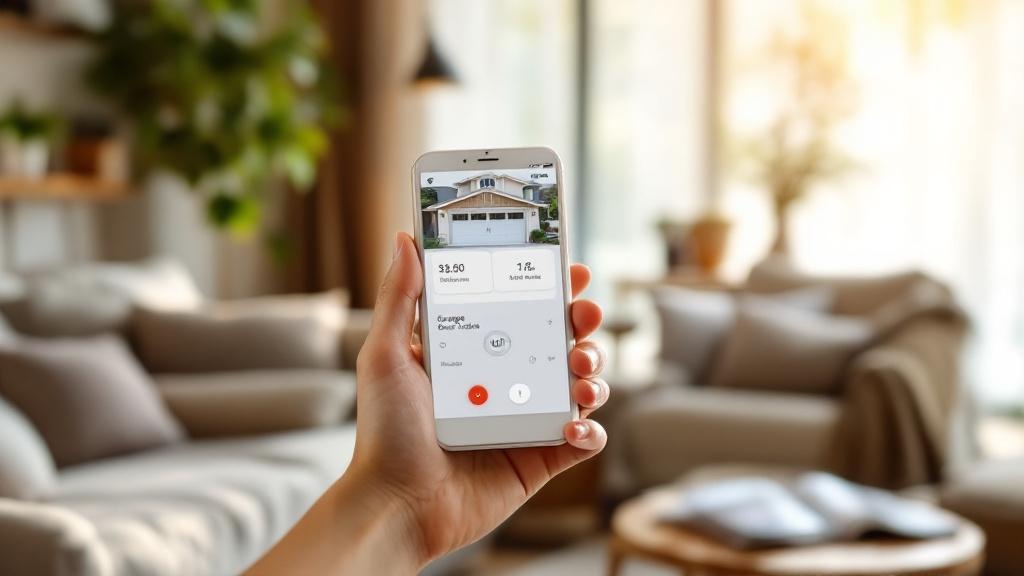
A smart garage door opener does far more than push a door up and down. Wi‑Fi control, alerts, video, and automation turn it into a handy part of daily life.
Wi‑Fi Connectivity And Smartphone Control
Built‑in Wi‑Fi is now common on Chamberlain and LiftMaster models using myQ and on Genie units using Aladdin Connect. Once connected to your home network, the opener can be controlled from a phone anywhere with a signal. That makes it easy to let in family, a contractor, or a pet sitter, even when you are not home.
What you can do from the app:
- Check door status in real time
- Open/close remotely from your phone
- Set schedules and auto‑close timers
- Create and revoke guest access
- View activity history
When we install Wi‑Fi openers for GTA clients, we include setup and a quick walk‑through of myQ or Aladdin Connect so everyone in the home knows how to use it.
In‑Garage Delivery And Security Services
Select myQ models can connect to Amazon Key for in‑garage delivery in eligible areas. When a verified driver arrives, the door opens, the package is placed just inside, and the door closes again. You get a notification, and the event appears in your delivery history.
This service helps protect parcels from theft and from snow or rain. Communications are encrypted, access is allowed only during the delivery window, and many customers appreciate the peace of mind. For urban GTA addresses where porch theft is common, we often recommend trying in‑garage delivery if it is available for your postal code.
Tip:
- Check availability by postal code in the myQ app.
- If you have a camera‑enabled opener, enable motion clips for delivery events.
Smart Home Platform Integration
Voice control and automations pull your opener into the rest of your smart home. Many models work with Amazon Alexa and Google Assistant so you can close the door by voice or ask if it is open. Most platforms require a PIN to open the door by voice, which is a smart security step, while closing usually does not need a PIN.
Apple fans can look for models or bridges that support HomeKit so the opener appears in the Home app. That makes it easy to add the garage door to Scenes. A Good Night scene might close the door, lock the front door, and turn off lights, while a Morning scene opens the door and turns on the mudroom lights. IFTTT rules can add geofencing so the door opens as your phone approaches, or turn on certain lights after dark whenever the door opens.
HomeLink integration inside many vehicles lets you use built‑in buttons instead of a visor remote. During installation, our team can program HomeLink and confirm every car in the household is set up properly before we leave.
Advanced Security Features In Smart Openers
Smart openers add a layer of awareness. Vacation/Lock mode disables remotes and keypads so the door can only be operated from the interior wall control. Encrypted Wi‑Fi, two‑factor authentication, and the ability to revoke guest access instantly help keep control in the right hands. Models with built‑in cameras add live view and clips in the app, which is handy for deliveries, kids arriving home, or checking whether the bay is clear before closing.
Security best practices:
- Use strong, unique passwords for myQ/Aladdin accounts
- Enable two‑factor authentication
- Periodically review and remove old guest access
- Keep firmware updated via the app
“Convenience is great, but treat the garage like another exterior door. Use strong credentials and review access regularly.” — Swift Garage Doors, Service Manager
Critical Safety Features: Non‑Negotiable Protection
Garage doors are heavy and powerful, so safety features are not optional. They are required by law and should be tested regularly.
Photo‑Eye Safety Sensors
Since 1993, every opener sold in North America includes photo‑eye sensors. One sensor sits on each side of the opening about 4 to 6 inches above the floor. They send an invisible beam across the opening, and if anything breaks the beam while the door is closing, the door stops and returns to full open.
Correct alignment matters. If a sensor gets bumped, the lenses get dirty, or bright sunlight hits the lens just right, the system can act up. Indicator lights on the sensors show when they are communicating. Test the system monthly by placing a box in the path during a closing cycle. During our installs, we mount sensors carefully, protect them from accidental kicks, and show you how to test them.
Automatic Force Sensing And Reversal
Openers also monitor force. If the door meets unexpected resistance while closing, the motor senses it and reverses. This is a secondary layer of protection that works with the photo‑eyes. Force settings must be adjusted properly so the door does not reverse needlessly or, worse, push against an obstruction without detecting it. We calibrate force settings to the door during installation and recommend a monthly test using a flat 2×4 laid on the floor.
“Test the reversal feature of your garage door opener every month by placing a 2×4 on the floor under the door.” — U.S. Consumer Product Safety Commission
Rolling Code Technology
Older remotes reused the same code each time, which thieves could capture and replay. Modern openers use rolling codes so each press sends an encrypted, one‑time code from billions of possibilities. The receiver expects the next code in sequence, which cannot be guessed or replayed. Security+ 2.0 on LiftMaster and Chamberlain and Intellicode on Genie are two well‑known versions. No action is needed from the user—this protection runs in the background and is a major upgrade if you are replacing a pre‑2000 unit in a GTA home.
Manual Release And Additional Safety Features
A red manual release handle hangs from the trolley. Pulling straight down disengages the opener so you can move the door by hand during a power outage or malfunction. Some premium wall‑mount models add a physical deadbolt that locks each time the door closes. Newer setups and add‑on shields can reduce the risk of someone trying to fish the release from outside.
During installation, we demonstrate the manual release and make sure everyone in the home knows how it works. A quick household safety checklist:
- Show each family member how to operate the manual release
- Keep remotes out of reach of children
- Do not walk or drive under a moving door
- Schedule annual professional service for springs and hardware
Top 10 Garage Door Openers For 2026: Expert Analysis
1. Swift Garage Doors Professional Installation Package (Brand Agnostic)
The best garage door opener is the one that fits your door, your garage, and your life—installed right the first time. Our package starts with a full site assessment, including door weight, spring condition, headroom, noise goals, and the smart features you want. We recommend from top brands like LiftMaster, Chamberlain, and Genie, and we handle everything from delivery to cleanup.
Licensed technicians perform the install, set travel and force limits, align sensors, connect Wi‑Fi, and train every user on the myQ or Aladdin app. Access to professional‑grade models that are not sold at retail is another advantage. You also get warranty support and our 24/7 emergency service if anything goes wrong down the road. In the GTA, complete packages typically range from $500 to $1,200 CAD depending on the unit. For homeowners and property managers who want a smooth process and long‑term value, this is the safest, smartest path. Reach out for a no‑pressure consultation and clear quote.
Consider this package if:
- You want one visit from assessment to training
- You prefer pro‑grade models and clean wiring
- You want a single point of contact for service and warranty
2. LiftMaster 87504‑267 (Secure View Belt Drive With Camera)
This premium belt drive pairs a quiet DC motor with a built‑in HD camera and two‑way audio inside the myQ app. You can see your garage in real time, talk to someone under the opener, and get motion alerts. The 360‑degree LED light ring produces bright, even illumination that reduces shadows across the entire bay.
Operation is whisper‑quiet thanks to the belt and soft‑start/stop control. Security+ 2.0 rolling codes, activity alerts, and live video add a strong sense of control. Wi‑Fi is built in, and the unit works with popular smart platforms. Battery backup keeps the door moving during an outage. Build quality reflects LiftMaster’s pro‑grade reputation, and the motor and belt carry long warranties. Expect about $800 to $950 CAD for the unit before installation. We install many of these in upscale GTA homes where quiet performance and in‑garage monitoring matter every day.
Highlights:
- Built‑in camera and two‑way audio
- Very quiet belt drive with DC motor
- Battery backup included
Watchouts:
- Camera features may require app permissions and settings
- Higher price than entry‑level models
3. LiftMaster 8500W (Elite Series Wall‑Mount Jackshaft)
If you want ceiling space back or have tricky headroom, the 8500W is a standout. Mounted beside the door, it turns the torsion bar directly, so there is no overhead rail to contend with. The result is a very quiet open and close with almost no vibration transmitted to rooms above.
Security takes a step up with the included automatic deadbolt that locks when the door closes. The opener includes Wi‑Fi and works in the myQ app for alerts and remote control. Battery backup is available as an accessory on certain packages; ask during selection. Installation requires a torsion spring system and specific clearances, so a professional site check helps avoid surprises. Priced roughly $900 to $1,100 CAD before labour, this opener is a top pick for garages with high‑lift tracks, car lifts, or limited headroom. We install these often in custom builds and townhomes where overhead space is tight.
Highlights:
- Frees up ceiling space
- Automatic deadbolt lock
- Very low vibration and noise
Watchouts:
- Requires torsion springs and side clearance
- Battery backup may be an add‑on
4. Chamberlain B6753T (Quiet Belt Drive With Battery Backup)
This Chamberlain belt drive hits the sweet spot of quiet performance, strong lifting power, and broad smart features. The 1.25 HPC DC motor starts and stops smoothly, which makes it a great fit for attached garages and homes with bedrooms overhead. Built‑in Wi‑Fi connects to the myQ app for control, alerts, schedules, and shared access.
Battery backup is included, which means you can still get in and out during a blackout. Motion‑activated LED lighting brightens the bay as you enter. Security+ 2.0 rolling codes protect the radio signal from code grabbing. At about $450 to $600 CAD for the unit, this model is one of the best value picks for a quiet garage door opener. In our GTA work, it is one of the most requested upgrades for homeowners who want premium performance without jumping to ultra‑premium pricing.
Highlights:
- Quiet, smooth operation with DC motor
- Battery backup at a mid‑tier price
- Strong myQ app support
5. Genie SilentMax 1200 (Smart Belt Drive)
Genie’s SilentMax 1200 is a smooth, quiet belt drive with a reliable DC motor and excellent smart options. Aladdin Connect Wi‑Fi is integrated on many configurations, and the app supports a wide range of automations and voice control with Google Assistant and Alexa. Many users appreciate that some integrations do not require extra subscriptions.
Power is more than enough for standard single and double residential doors. Intellicode rolling codes protect the remote signal, and LED lighting brightens the space. Battery backup is available on certain models if you want power‑out operation. Pricing typically falls between $400 and $550 CAD. If you already use a lot of Google or Alexa gear and want easy voice control, this Genie garage door opener is a strong contender. We often suggest it for tech‑forward households that value app flexibility.
Highlights:
- Quiet belt drive with DC motor
- Strong voice assistant support
- Flexible Aladdin Connect app
6. LiftMaster 8165W (Professional Chain Drive)
The 8165W delivers pro‑grade chain drive durability with a proven AC motor. It has the lifting muscle to handle heavier doors, and the chain keeps hardware costs down. Built‑in Wi‑Fi brings it into the myQ app for alerts, schedules, and remote operation from your phone.
Noise is higher than a belt drive, so we suggest it for detached garages or places where sound is not a major concern. Battery backup is available on related models or with specific kits, so ask during selection if that matters to you. Priced around $400 to $500 CAD for the unit through professional channels, it is a favourite for value‑minded owners who still want smart control. In the GTA, we install this LiftMaster garage door opener frequently on rental properties and detached workshops where reliability and cost matter most.
Highlights:
- Affordable pro‑grade chain drive
- AC motor strength
- Built‑in myQ connectivity
7. Chamberlain B4613T (Best Budget Belt Drive)
If you want belt drive quiet at a friendly price, the B4613T is a standout. The DC motor delivers smooth operation, and the belt keeps noise way down compared to entry‑level chain drives. It connects to myQ over Wi‑Fi for easy phone control, alerts, and scheduling.
A big plus is battery backup at this price point, which adds real‑world convenience during outages. LED lighting is included, and Security+ 2.0 protects your radio signal. You will find this model widely available at Canadian retailers for roughly $350 to $450 CAD. For standard steel or aluminum doors, this Chamberlain garage door opener gives you quiet operation and smart features without stretching the budget. We recommend it often to first‑time smart opener buyers who want a calm, quiet garage in an attached home.
Highlights:
- Budget‑friendly belt drive
- Battery backup included
- Full myQ feature set
8. Genie Model 6170 (Wall‑Mount Jackshaft)
Genie’s wall‑mount option frees up ceiling space and offers quiet, direct drive operation on the torsion bar. It is a great fit for high‑lift tracks, low ceilings, or garages where you want overhead storage. Aladdin Connect smart control is baked in, and it plays nicely with common voice assistants and automations.
Battery backup is available on certain versions, and optional locking hardware can add a physical barrier at the door. Installation requires a torsion spring system and correct clearances, so a professional assessment is recommended. Expect $750 to $950 CAD for the unit. If you prefer Genie over LiftMaster or want tight Aladdin Connect integration, this model is a strong alternative to the 8500W. We have had solid results with it across Toronto homes that need the wall‑mount approach.
Highlights:
- Wall‑mount space saver
- Smooth, low‑vibration operation
- Strong Aladdin Connect integration
9. Craftsman 1/2 HP Chain Drive (Value Workhorse)
For the lowest upfront cost while still getting dependable performance, a Craftsman 1/2 HP chain drive is hard to beat. It provides basic, steady lifting for standard doors and is widely available at Canadian retail. Some newer models include Wi‑Fi with myQ, while older or entry‑level versions offer simple remote‑only operation.
Noise is what you would expect from a chain drive, so it suits detached garages or secondary spaces. Units generally run $200 to $350 CAD. Because Craftsman openers are produced by the Chamberlain Group, they share proven technology under the hood. We suggest stepping up to a DC motor and Wi‑Fi if your budget allows, but for tight budgets or simple setups, this value pick does the job.
Highlights:
- Low cost of entry
- Durable chain drive
- Select models support myQ
10. Ryobi GD301 (Modular Battery‑Powered System)
This belt drive opener runs on Ryobi’s 18V ONE+ batteries, which means no nearby outlet is required. That makes it handy for garages without easy electrical access or for temporary setups. The motor is quiet, and the modular accessory system lets you add a fan, speaker, laser parking guide, and more.
App control is available, though the feature set may be more limited than full Wi‑Fi platforms from Chamberlain or Genie. Battery life depends on usage, but users often see a couple hundred cycles per charge with higher‑capacity packs. Expect about $400 to $500 CAD without batteries. We view this as a niche choice for DIY users in the Ryobi battery family or rentals where wiring is complicated. For most homes, a hardwired smart garage door opener offers more convenience, but the GD301 fills a specific need well.
Highlights:
- No outlet required
- Modular accessory ecosystem (fans, speaker, parking laser)
- Good fit for temporary or hard‑to‑wire spaces
Choosing The Right Opener For Your Specific Needs
There is no single best garage door opener for every home. The right pick depends on your garage layout, door size and construction, tolerance for noise, and how you want to use smart features day to day. Think about who sleeps near the garage, how often power outages hit your area, and whether overhead storage or car lifts matter to you. A five‑minute checklist of these details will narrow the field in a hurry.
If you are weighing a garage door opener chain or belt, remember that belts are much quieter and usually the better fit for attached homes. If you are deciding between Genie or Chamberlain, think about the app you prefer and which voice assistant you already use. When you are still not sure, we are happy to compare options side by side and match a unit to your door and budget.
For Attached Garages With Living Spaces Above Or Adjacent
Noise is the main issue. A belt drive opener with a DC motor and soft‑start/stop is the best first choice for most attached homes. Models like the Chamberlain B6753T, LiftMaster 87504‑267, or Genie SilentMax 1200 keep sound down and reduce vibration that can travel into bedrooms or a home office. For the quietest possible setup and zero overhead vibration, a wall‑mount unit such as the LiftMaster 8500W is the premium route. We also use vibration‑damping mounts and secure fasteners to cut structure‑borne noise in multi‑level Toronto homes.
For Heavy, Oversized, Or Custom Doors
Power matters. Solid wood, carriage‑style designs, tall doors over 10 feet, or extra‑wide double doors put stress on smaller motors. Aim for at least a 3/4 HP class motor, and step up to 1 HP or more for very heavy builds. A pro‑grade chain drive like the LiftMaster 8165W is a budget‑friendly workhorse, while a wall‑mount 8500W handles heavy lifting with quiet operation. High‑power belt drives such as the Chamberlain B6753T bring strength plus calm operation when sound matters. We always check springs and balance before install to protect your new motor.
For Garages With Unique Ceiling Configurations
High‑lift tracks, low headroom, beams, storage racks, or sloped ceilings can block a traditional rail. A wall‑mount jackshaft opener solves these issues by driving the torsion bar directly and clearing the ceiling entirely. The LiftMaster 8500W and Genie 6170 are proven picks. You will need a torsion spring system and adequate side room, so a quick site check confirms compatibility. We handle many of these installs in Toronto condos and townhomes where ceiling space is limited.
For Smart Home Enthusiasts And Tech‑Savvy Users
Smart control should be front and centre. Look for built‑in Wi‑Fi, strong app support, and the integrations you care about. A myQ‑ready Chamberlain or LiftMaster opener pairs well if you want Amazon Key delivery or Apple CarPlay support, while Genie’s Aladdin Connect is great with Google Assistant and Alexa. If you want voice control, verify whether your platform needs a PIN to open the door and whether any subscriptions apply. Add IFTTT or HomeKit if you like scenes, geofencing, or tighter links with lights and cameras.
Quick decision checklist:
- Attached home? Choose a quiet belt drive with DC motor.
- Heavy/oversized door? Choose 3/4 HP or 1 HP class.
- Ceiling storage or low headroom? Choose wall‑mount (jackshaft).
- Power outages common? Choose battery backup.
- Smart home heavy‑user? Choose myQ or Aladdin Connect based on your assistants and automations.
Read also Best Garage Door Opener Under $500
Conclusion
So, which is the best garage door opener? The real answer is the one matched to your door, your garage, and your daily routine—and installed by someone who does this work every day. Chain drives still shine on heavy doors and detached garages. Belt drives keep attached homes peaceful. Wall‑mount units solve tough headroom and storage problems. DC motors bring smooth motion, battery backup keeps you moving in a blackout, and myQ or Aladdin Connect puts control in your pocket.
Swift Garage Doors helps GTA homeowners and property managers cut through the noise with clear, honest advice. Our licensed technicians check the door first, recommend the right opener from leading brands, and handle setup from Wi‑Fi to HomeLink. You also get 24/7 emergency support and a team that stands behind the work. If you want a quick, clean upgrade and a quiet, reliable door for years to come, book a free consultation and we will build the right plan together.
FAQs
Which is the best garage door opener for an attached garage?
A belt drive DC model is the quietest choice. We often install Chamberlain B6753T or LiftMaster 87504‑267 in attached GTA homes for smooth, low‑noise operation.
How do I choose between Genie or Chamberlain?
Compare the apps and integrations you already use, desired features like battery backup, and price. We install both and can walk you through the pros for your setup.
Is battery backup worth it?
Yes—especially if you rely on the garage as a primary entry. A battery backup lets you open and close during outages and keeps safety features active.
How long does a garage door opener last?
With regular maintenance, 10–15 years is common. Heavier doors, poor balance, or harsh environments can shorten that. Annual service helps extend life.
Can I install an opener myself?
Many retail models are DIY‑friendly, but correct spring balance, sensor alignment, and force settings matter. Professional installation from Swift Garage Doors includes tuning, Wi‑Fi setup, and safety checks.
What maintenance does an opener need?
- Check and align photo‑eyes monthly
- Inspect and lubricate rollers, hinges, and the rail (use appropriate lube)
- Test reversal with a 2×4 each month
- Replace remote/keypad batteries as needed
- Have springs and cables inspected annually by a pro
Will my car’s HomeLink work?
Most modern vehicles with HomeLink are compatible with LiftMaster, Chamberlain, and Genie. We can program every vehicle during installation.
Are chain drives really that noisy?
They are louder than belts due to metal‑on‑metal contact. In detached garages, noise is less of an issue; in attached homes, a belt drive is usually better.
What if my door is very heavy or tall?
Plan on a 3/4 HP or 1 HP class opener, verify torsion spring sizing, and consider wall‑mount to reduce vibration. We recommend a site visit to confirm specs.
Can smart openers work with Apple devices?
Yes. myQ supports Apple CarPlay for in‑vehicle control in supported regions, and certain bridges add HomeKit support so you can include the garage in Apple Home scenes. Always verify regional compatibility.
Do older remotes work with new openers?
Sometimes, but not always. Newer units use rolling codes (e.g., Security+ 2.0, Intellicode). We typically provide updated remotes and can add a compatible external receiver if needed.
How do I reduce vibration in a multi‑level home?
Use a belt drive or wall‑mount, add vibration‑damping brackets, and make sure the door hardware is tuned and lubricated. We address these details during install.